
QSR and Fast Food: The US Playbook Won't Save You Here
Reporting season is over and if you were paying attention, there were no major shocks. A clear picture emerges for Australian QSR (Quick Service Restaurants).
Australian QSR is performing strongly at a sector level.
In 2025 there were 250 net new stores opened, the strongest year of network growth we’ve seen in a decade.
Melbourne overtook Sydney in total QSR locations for the first time, driven by growth in outer suburban corridors rather than the CBD.
Individual brands are diverging sharply.
The brands paying the price are almost always the ones that assumed Australian consumers would come to them, rather than the other way around.
It’s also interesting to compare Australian QSR performance with the US. The brands winning in America are not always the ones winning here. And the ones struggling here are sometimes thriving there.
At an overall macro level, the sector is in good shape. Population growth, sustained migration and cost-of-living pressures are all structural tailwinds.
At a brand level, it is a very different story.
The Standouts
No real surprises here. McDonald’s continue to operate almost without error. In our view, the MyMacca’s loyalty programme is one of the most under appreciated competitive assets in Australian retail. McDonald’s loyalty programme generated nearly $37 billion in systemwide sales in 2025, up 20% year on year, with close to 210 million active users globally. The Australian ‘Maccas’ operation mirrors this, with seamless digital integration and a value strategy that speaks to cost-conscious consumers without cheapening the brand. When competitors struggle to articulate value in a cost-of-living environment, McDonald’s simply does it.
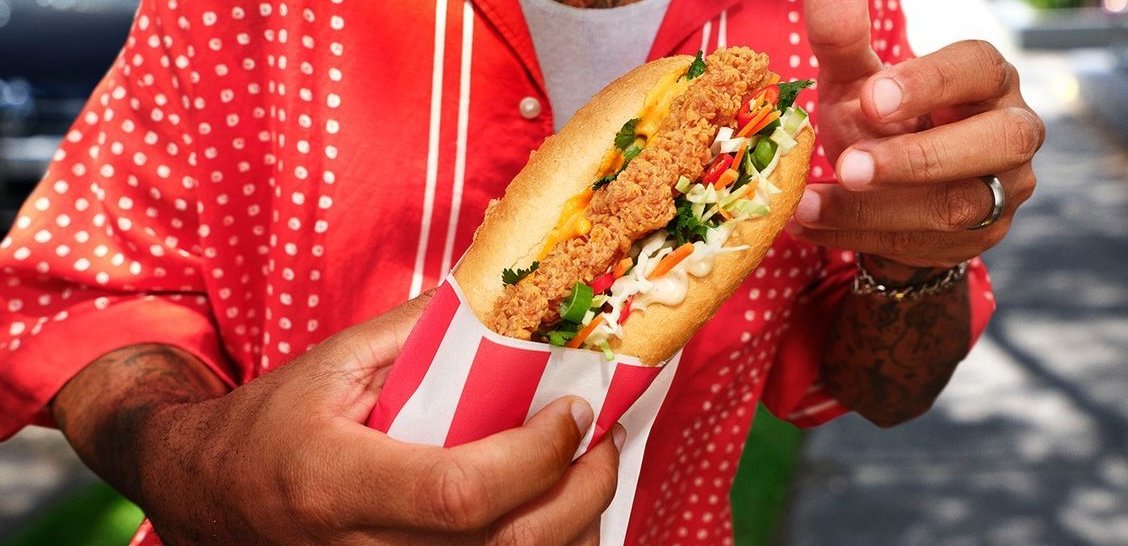
KFC is the other standout, particularly when you look through the Collins Foods lens. Collins Foods reported a 6.7% lift in total company sales for FY25, with KFC Australia achieving 3% revenue growth to $1.15 billion. Digital sales now represent 34.2% of total revenue. That is not a vanity metric. That reflects a genuine shift in consumer behaviour that Collins Foods has capitalised on.
KFC’s marketing has also been genuinely bold. The Waffle Double Chicken. Zinger Nachos. The Zinger Bánh Mi. This isn’t a brand standing still. And KFC reflects something important: the strongest performers in 2025 did not let their marketing go quiet between product launches. They kept rolling out product news, limited-time offers, and format innovation to maintain attention and drive repeat visits.
Consistency of storytelling is a competitive advantage, and KFC is demonstrating that better than most.
The Mexican Chapter
This is where the divergence between Australia and the US becomes most visible.
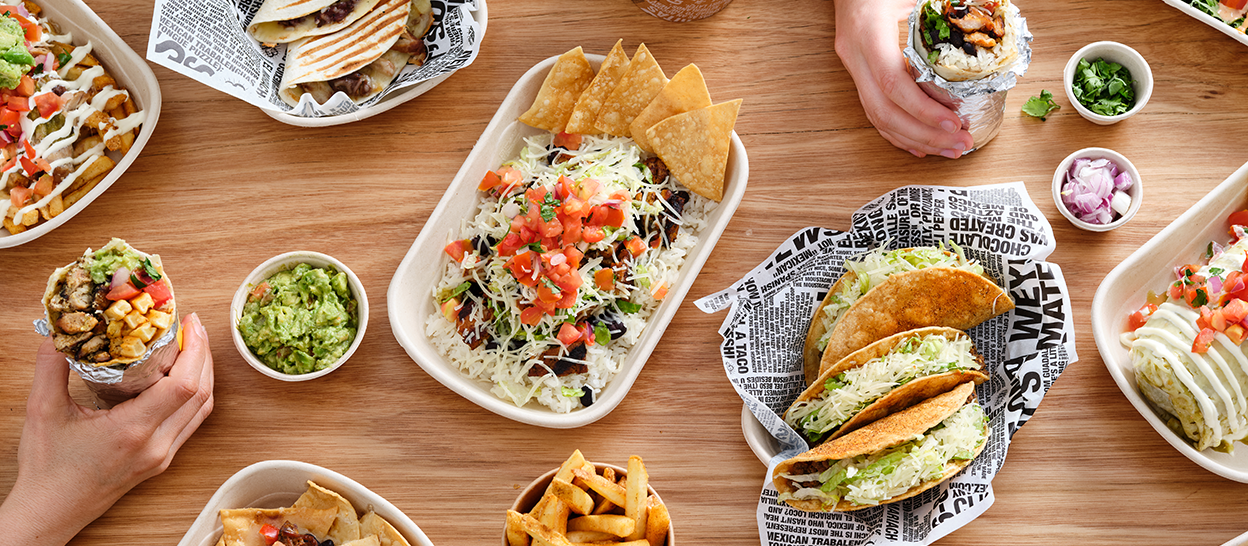
Let’s start with Taco Bell. In the United States, Taco Bell, was actually one of the top performers for 2025. Sure they’ve been operating in the US for over 60 years, but they’ve pivoted hard and are thriving on the value part of the market. In Australia, Collins Foods has confirmed it is actively seeking a buyer for its Taco Bell operations. If no buyer is found within twelve months, the stores will close. Revenue for the first half of FY25 was $24.6 million. The business is simply not profitable and does not generate positive cash flow.
The easy explanation is that Guzman Y Gomez (GYG) ate Taco Bell’s lunch here in Australia. We don’t fully buy this narrative. Taco Bell and GYG play in different parts of the market.
The real issue is one that repeats itself with American QSR brands entering Australia. Arrive with fanfare. Rely on brand recognition built in another market. Invest minimally in local marketing. And then wonder why Australian consumers are not walking through the door.
Australian consumers are not a subset of the American consumer base. They need to be earned.
Guzman Y Gomez (GYG) is the obvious counterpoint, and the Australian performance is strong. GYG had net growth of 27 stores in 2025, bringing their total now to over 230 stores in Australia. However we also need to talk about Zambrero. Zambrero had net growth of 31 stores, bringing their total to close to GYG at now at 200 stores.
Zambrero is frequently underestimated in this conversation, and it should not be. We don’t think Zambrero will overtake GYG here in Australia. But it is growing faster than most analysts expected. It has a genuine brand purpose through its Plate 4 Plate meal donation model that resonates with consumers in a way that pure price competition cannot replicate. Will be interesting to see how their expansion into the UK plays out.
GYG’s US story is a different conversation. The US operation recorded A$13.2 million in operating losses in FY25, with comparable sales growth of 3.7% in the opening weeks of FY26, well below the 7.6% forecast. GYG founder Steven Marks has personally relocated to Chicago to steady the business. The narrative that US expansion is simply a matter of time should be treated with scepticism right now.
However, we also don’t buy the narrative that the US is a completely lost cause. Whilst Taco Bell owns the ‘value’ end of the US market, Chipotle’s (who has over 3,700 stores in the US) grip and performance significantly slipped in 2025, reporting their worst year ever. And yet the overall Mexican QSR continues to experience strong % growth in US. There’s also a lot of well established independent Mexican QSR in the US, but no one does at scale. Del Taco has over 550 stores, but is primarily located on the West Coast. So whilst GYG’s US model is not yet working at the numbers the market was sold, there’s still hope. There’s potential to take market share from Chipotle and if done right, we believe there’s still a real opportunity for GYG to build a real US business.
The Chicken Wars
Mexican gets most of the attention, but chicken is the other category worth watching closely, and it’s moving fast.
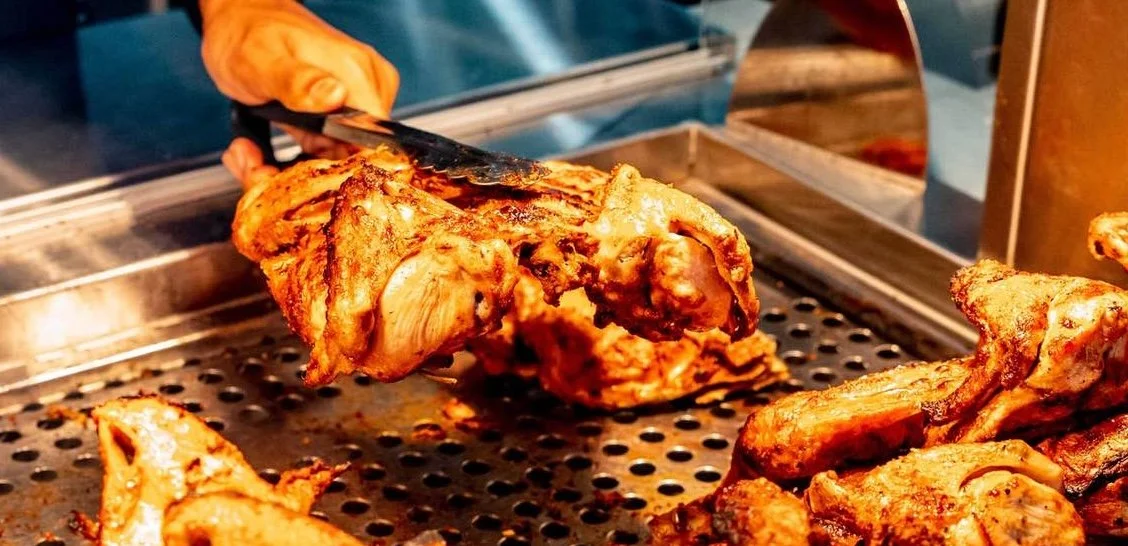
KFC dominates at scale, but it is the challenger brands where things are getting interesting. El Jannah is the story most people in this industry are not talking about loudly enough. The Western Sydney charcoal chicken institution, built from a single Granville store in 1988 into a genuine cult brand, was acquired by American private equity firm General Atlantic in a deal believed to be worth close to $1 billion in late 2025. The plan? Grow from 50 stores to 200, and then take the brand global. El Jannah added 15 new stores in 2025 and has flagged more than 25 new restaurants before the end of 2026. This is a brand with serious capital behind a serious expansion.
Chargrill Charlie’s is another name worth watching. The premium charcoal chicken brand, now under the Craveable Brands umbrella alongside Red Rooster and Oporto, has expanded to 24 stores and made its first moves into Queensland in 2025. It is still small, but the Craveable Brands backing gives it distribution muscle that a standalone operator would not have.
Oporto also added 17 net new stores in 2025 and Nando’s grew by 10. The overall picture in chicken is a category with genuine momentum at both the mainstream and premium end. The brands that move decisively on site selection and marketing in the next eighteen months will be well-positioned. The ones that sit back and wait will find the good sites taken.
The Domino’s Problem
Domino’s is a cautionary tale about what happens when you abandon your core proposition without replacing it with something credible.
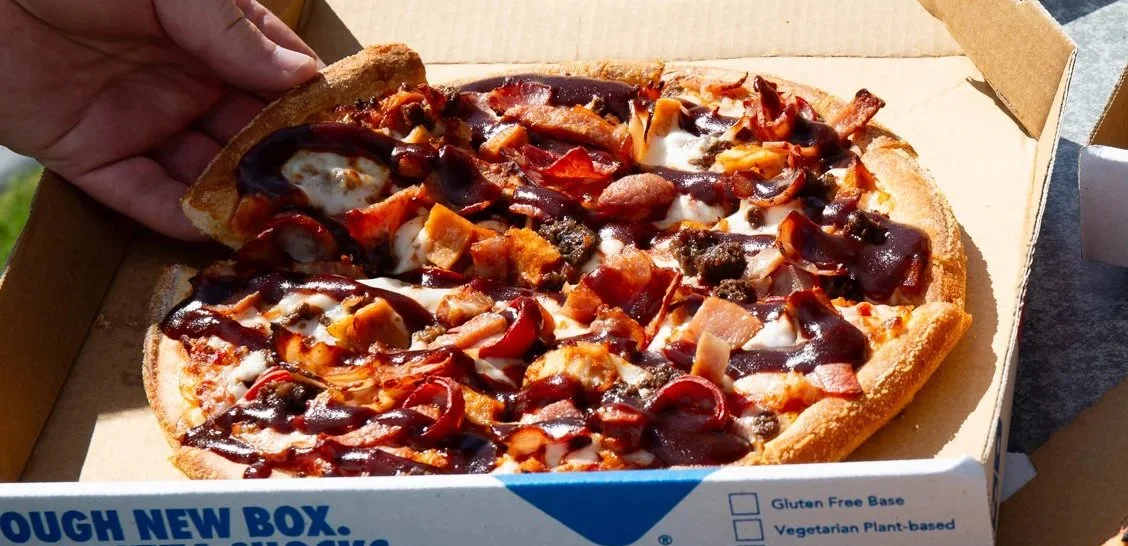
ASX-listed Domino’s Pizza Enterprises has seen its share price fall from a peak about $160 to approximately $18 today. Ouch. The company has shifted away from its aggressive discount positioning in Australia over recent years, citing franchisee profitability concerns. That rationale is understandable. Running a QSR franchise in Australia is structurally harder than it looks from the outside. Award wage obligations, rising occupancy costs and third-party delivery commission rates all squeeze the unit economics in ways that make the old $5 pizza model unsustainable for franchisees, even if consumers loved it.
But the question that has not been answered convincingly is: what replaced value in the Domino’s brand equation? Compare this move to the United States, where Domino’s is doubling down on value and taking market share. In Australia, the gap left by Domino’s pulling back from aggressive pricing is visible, and there is no clear narrative filling it. Any competitor paying attention will know exactly what to do with it.
The Year Ahead
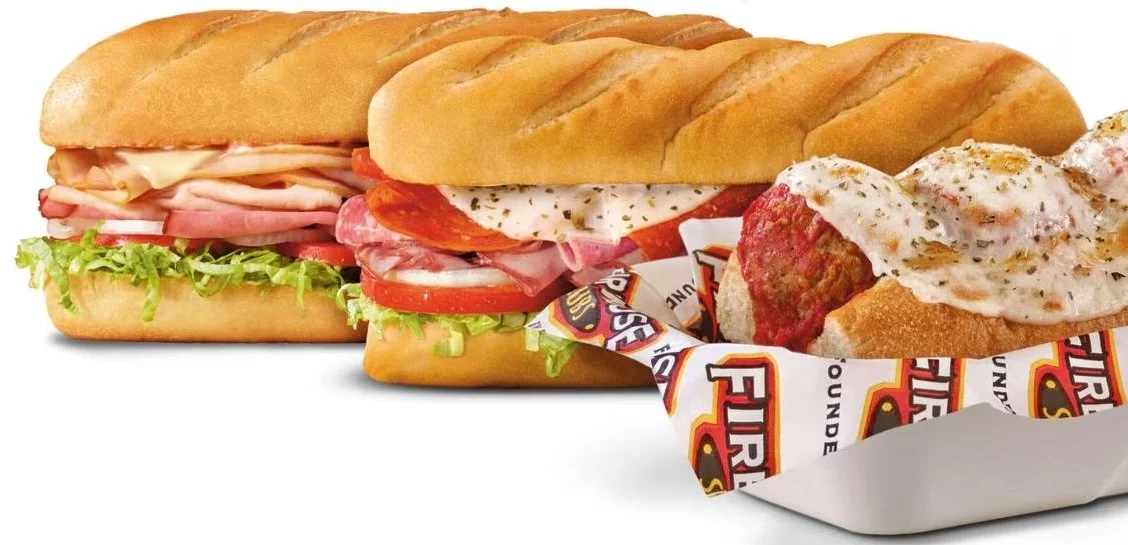
One entry worth watching in 2026 is Firehouse Subs. Restaurant Brands International and Retail Food Group (RFG) have confirmed a development and franchise agreement to open 165 Australian restaurants over ten years, with the first store planned for Queensland. Firehouse targets the premium end of the sandwich category, which is exactly where Subway has never fully competed. We’ve tried the brand a number of times overseas and have genuinely been impressed. The brand has been taking market share from Subway, and has a compelling product story.
The question is whether RFG can execute. Their portfolio spans multiple well-known Australian brands that have faced their own headwinds in recent years. Whether Firehouse Subs becomes a genuine Subway challenger or joins the growing list of strong American brands that underinvested in local market building will depend almost entirely on RFG’s approach. The first two to three years of marketing investment and franchisee support will determine which way it goes.
Then there is Wendy’s. The brand launched its first Australian store in January 2025 at Surfers Paradise. Flynn Group, the master franchisee, has stated ambitions of 200 stores by 2034. Flynn is a serious operator with a $4.5 billion USD global portfolio, which makes this more credible than most US brand announcements.
But Australia has a long history of humbling American burger brands. Particularly burger brands that are expensive, don’t market well and are a ‘me too offer’. The product and the brand are strong. The investment in local marketing and the patience to build genuine Australian brand equity will determine whether this becomes a real story or another cautionary tale to add to the list.

The GLP-1 Wildcard
GLP-1 weight loss medications, Ozempic and Wegovy, are already reshaping parts of the American food and beverage industry. Volume within some QSR categories in the US is softening in markets with high GLP-1 adoption rates. GYG has already referenced it publicly, noting the popularity of smaller format menu items.
In Australia, GLP-1 adoption is still relatively limited compared to the United States. But it is growing. Availability and cost are still barriers here in Australia, but these are improving. With an oral form of Wegovy receiving FDA approval in December 2025, this will dramatically increase both the availability and adoption rate amongst consumers. Our forecasts have around ~10% of the Australian population will be on it by 2030 - 2035.
This is not a crisis for Australian QSR in 2026. But any operator or investor who is not at least modelling that scenario is not paying attention. The category that is most exposed is high-frequency, high-volume snacking and indulgence occasions. The category least exposed is brands with strong freshness and nutrition positioning. Smart brands will know where they sit before this becomes a conversation they are having reactively.
What the Winners Are Getting Right
Look across the top performers in Australian QSR for 2025, and the pattern is consistent.
The strongest brands treated digital and loyalty as core revenue channels, not bolt-on features.
They communicated value through genuine tiered offerings and perceived quality rather than simply cutting price.
They did not let their marketing go quiet between product launches. And they understood that building frequency requires giving consumers a reason to come back next week, not just a reason to come in today.
The brands that struggled were often waiting for conditions to improve, or assuming that brand recognition built somewhere else would do the work for them. In Australia's QSR market right now, that assumption is expensive.
