
Online Furniture, the US and koala: why the World’s biggest market is the hardest to win
When a company raises $68 million in an IPO and describes the United States as its primary growth runway, the natural question isn’t whether the US is a big opportunity. It obviously is.
The question is whether that opportunity is as accessible as the prospectus makes it sound.
Koala lists on the ASX on Tuesday, March 31, 2026. We’ve been watching this one closely because, beyond the Koala-specific story, the IPO crystallises something we talk about with clients regularly. The US furniture market is not like other markets, and the graveyard of well-capitalised, design-led brands that went in optimistic and came out humbled is long.
This article does not question whether Koala is a good or bad investment. It’s a look at the structural realities of expanding into the world’s biggest furniture market, and what the evidence tells us about what it actually takes to win there.
The Scale Illusion
By Koala’s own account, the US ‘sitting’ furniture market is worth approximately $39 billion AUD. That number is staggering. It is also, in many ways, misleading.
A large market is not the same as an accessible market. The US furniture sector is hyper-fragmented, deeply regional, and still heavily dominated by physical retail in a way that digital-native brands consistently underestimate. Brands that have succeeded there have generally done so by building physical presence, investing heavily in brand awareness over many years, or both.
Koala’s US revenue forecast for FY26 is $29.3 million AUD. That’s less than 1% of that total addressable market. They entered in November 2023. That’s not a criticism; every brand starts somewhere. But it contextualises the opportunity: the distance between current position and any meaningful scale is vast.
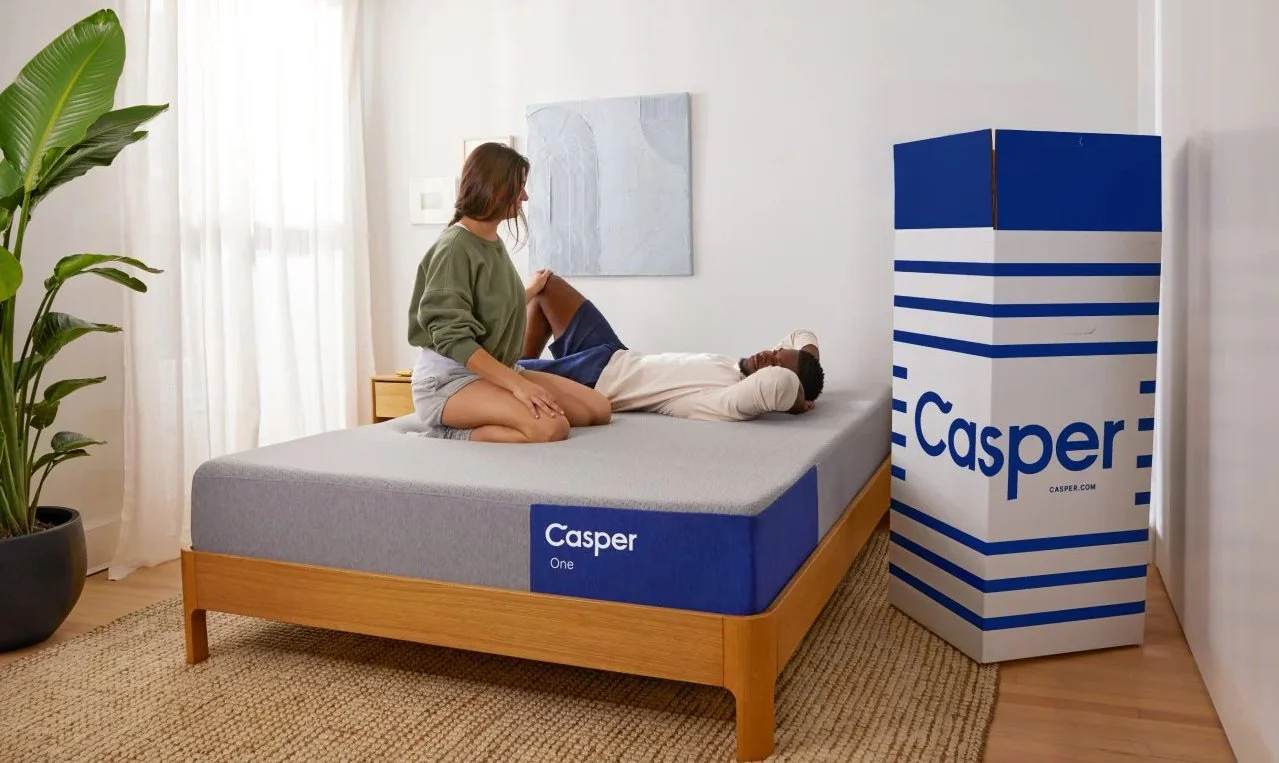
Casper: a $1.1 billion idea that sold for $286 million.
The Casper Lesson
The most instructive recent case study isn’t Australian. Casper launched in 2014 with a genuinely differentiated product for the time (mattresses in a box), a content-driven growth strategy, and eventually a $1.1 billion valuation. However, by the time it IPO’d in February 2020, the cracks were visible. By November 2021, it had been acquired for $286 million – a fraction of its peak.
What went wrong?
Several things, but three stand out. First, the cost of winning new customers proved far higher than Casper’s early numbers suggested. Their first wave of customers found them organically – through word of mouth, press coverage, and the novelty of a new idea. Those customers were initially relatively cheap to acquire. Once that wave exhausted itself and Casper had to pay to find the next customer, the economics looked completely different.
Second, what started as a genuinely differentiated product quickly became a crowded category. Within a few years, dozens of ‘me-too’ competitors had entered the market offering essentially the same model – roll-up mattress, free trial, easy returns – at lower price points. Barriers to entry were low. A manufacturer and a digital advertising budget were all it took. Casper’s early brand advantage eroded faster than anyone anticipated, and the resulting competition for the same customers drove acquisition costs significantly higher still.
Third, the mattress category – and sitting furniture has similar dynamics – has a long replacement cycle (from our internal research, consumers replace a sofa roughly every 8 years). Repeat purchase as a retention mechanism is largely unavailable. And Casper’s original focus on younger, urban consumers compounded this: a demographic that is more price-sensitive, more likely to be renting, and less committed to a long-term furniture purchase than the home-owning households that drive most category spending.
Casper was extremely well-funded, well-branded, and operating in a less competitive environment than exists today. The lesson isn’t that DTC furniture can’t work in the US. It’s just incredibly difficult, and the economics require more patience and more capital than most models anticipate.

Australia's favourite burrito. America's toughest classroom.
What Australian Brands Have Learned
Australian brands have been making their bets on the US for years now. The results tell a consistent story.
Guzman y Gomez (GYG) is perhaps the most relevant live case study. They’ve been transparent about their US losses: $13.2 million in operating losses in FY25 alone. The US is, for GYG, a deliberate long-term investment — they’ve framed it explicitly as a decade-long play. Not many brands are willing to absorb that kind of loss and call it strategy.
Aesop is another example. They built brand equity through physical retail, positioning and patience — to be acquired by L’Oréal in 2023 for $2.5 billion.
The pattern that emerges is not that Australian brands can’t succeed in the US. It’s that the ones with the best outcomes have been clear-eyed about the investment required and realistic about the timeline.
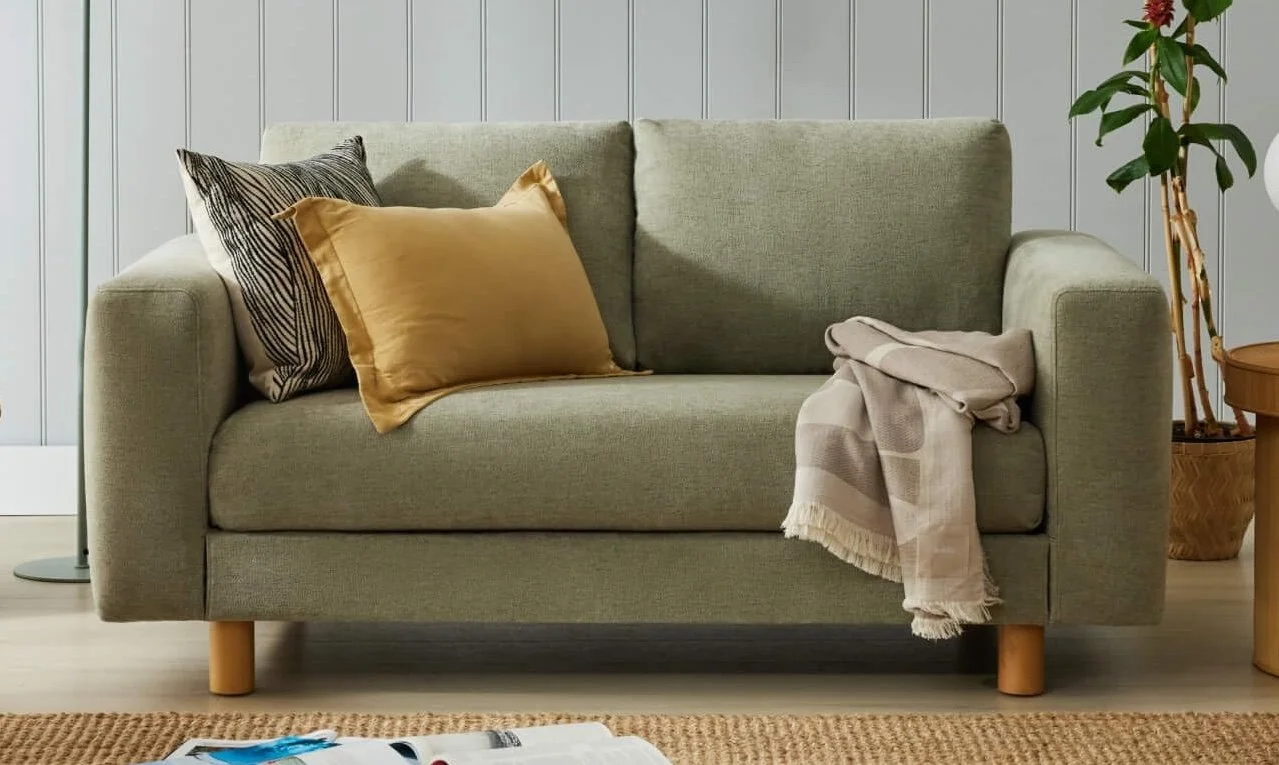
Koala's sitting furniture range: the product at the centre of a $305 million ASX listing
What Koala Has Going For it
Let’s be direct. Koala is a more interesting business than the average furniture brand attempting this.
Their Japan expansion is a meaningful proof of concept. Launched in 2017, they’ve built a profitable business in a market that is, in many ways, harder to crack for a Western brand than the US — language, culture, established local players. Notably, after nearly a decade in Japan they still hold less than 1% of the $2.6 billion AUD Japanese furniture market — yet the business is profitable. That reframes the story: international expansion for a brand like Koala isn’t about taking meaningful share quickly. It’s about finding a profitable niche and building patiently. If the Japan playbook is the template, the US timeline may be longer than most IPO narratives suggest.
Their design credentials are also genuine. Koala is only the second Australian furniture company to achieve B Corp certification — and it's not just a marketing asset. It's a signal of operational discipline that tends to correlate with better long-term outcomes.
Overall global revenue growth is real: $276.7 million in FY25 moving to a forecast of $332 million in FY26. They are also, crucially, profitable — reporting a pro forma NPAT of $6.6 million in FY25. That matters. They are not burning cash to fund US growth at the expense of a profitable core.
And the fact that Milham, the CEO, is not selling shares in this IPO is a meaningful signal. The shares being sold belong primarily to earlier investors and an inactive co-founder. Skin in the game matters.
The Structural Headwinds
The tailwinds are real. But so are the challenges.
Physical retail is the most immediate. Despite the rise of online and AI, US furniture consumers still overwhelmingly want to sit on something before they buy it. The physical showroom remains central to how Americans make high-consideration furniture decisions, and building that presence is expensive and slow. Online-native brands have consistently underestimated this.
Supply chain concentration deserves close attention. Approximately 70% of Koala’s products come from a single Chinese manufacturer. In a normalised trade environment, that’s a concentration risk. In the current US-China tariff environment, it becomes a live cost pressure (though to be fair, this is industry-wide, not a Koala-specific flaw).
Customer acquisition is arguably the most structural of the challenges. The US digital advertising environment has deteriorated sharply since 2020 — iOS privacy changes, signal loss across Meta and Google, surging competition for inventory. Brands entering today are paying more per customer, for a product that probably won’t be repurchased for eight years. The unit economics demand either very high margins or a very long runway. Casper, for reference, was operating in what now looks like a comparatively cheap era — and the customer acquisition costs still helped bring it down.
The brand question is perhaps the most interesting. Koala’s identity is distinctly Australian. This can be a genuine asset, as Aesop proved. However, like most furniture brands at scale, their products are now manufactured in Asia, so the Australian story has to be told through design, values and credentials rather than provenance. With B Corp certification and a genuine design-forward positioning, that’s achievable. But it requires incredibly sharp execution in a market where Koala remains largely unknown.
What to watch
For anyone following the Koala story post-listing, these are the metrics that will tell you whether the US thesis is working:
US revenue growth rate. The FY26 forecast of $29.3 million represents meaningful growth. Whether they can sustain that trajectory into FY27 and beyond - without a disproportionate increase in marketing spend — is the core question.
Customer acquisition cost (CAC) versus Lifetime Value (LTV) in the US market specifically. They will not disclose this directly, but the shape of their US margin will tell the story.
Any movement on physical retail. A pop-up strategy, a retail partnership, or a permanent showroom would signal a more aggressive and credible US commitment.
Supply chain diversification. Any disclosure about reducing the single-supplier concentration — particularly given the tariff environment — would reduce what is currently the most concrete risk in the model.
The US is the world’s biggest furniture market. It is also, for online-native brands, one of the hardest to win. Koala is a well-run business making a rational bet. The question is not whether the bet is reasonable. The question is how much patience the market is prepared to extend.
We’ll be watching.
